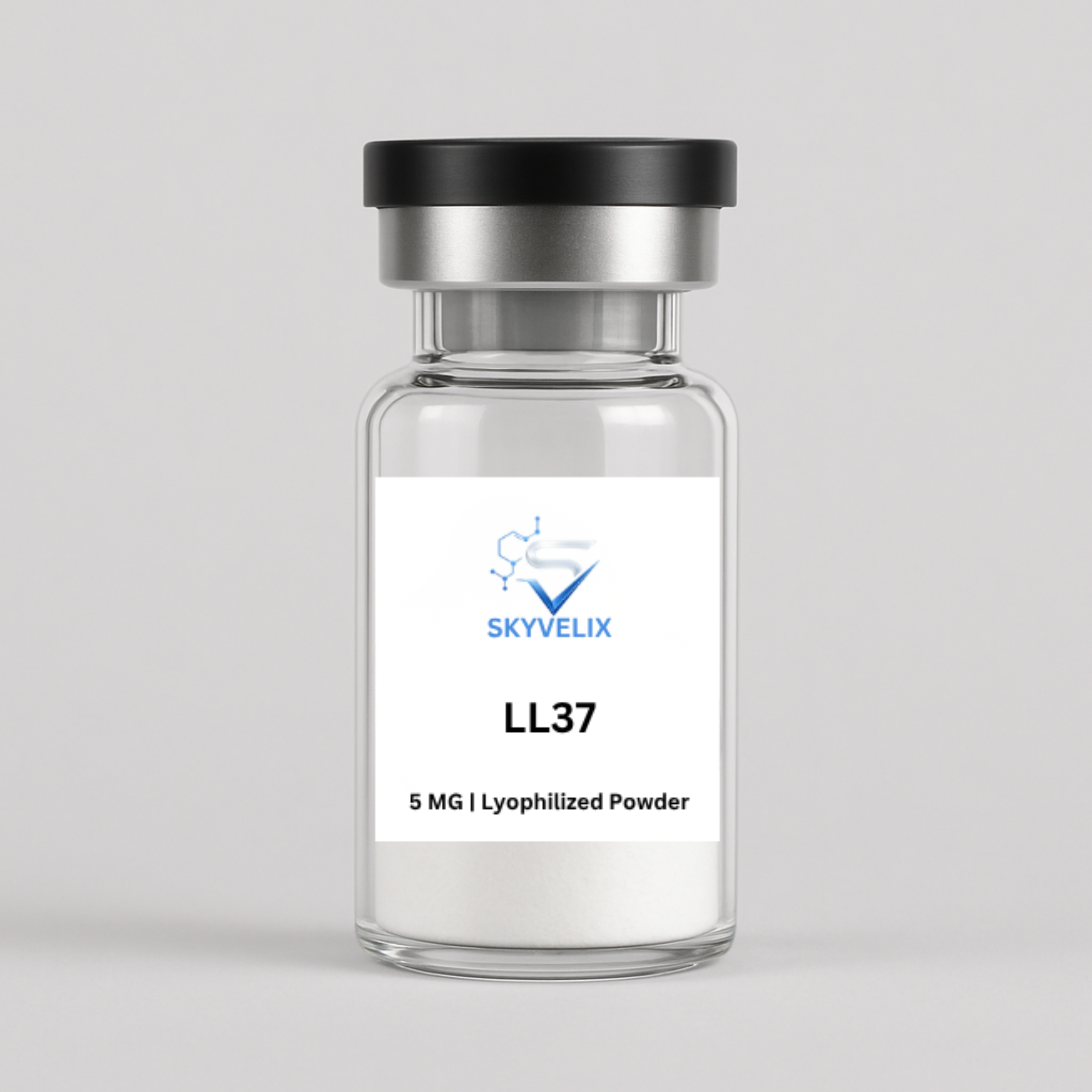
LL37
LL-37 Product Description — Research Use Only
LL-37 is a human cathelicidin antimicrobial peptide studied for its role in innate immune defense, microbial-response pathways, inflammation signaling, wound-repair activity, and barrier-function research. It is the active C-terminal peptide fragment of hCAP18 and is one of the best-known host-defense peptides in human antimicrobial peptide research.
Research on LL-37 has most commonly focused on antimicrobial activity, immune signaling, inflammation response, wound-healing pathways, skin-barrier repair, epithelial defense, and tissue-remodeling research. Published reviews describe LL-37 as a broad-spectrum antimicrobial and immunomodulatory peptide with roles in wound healing, angiogenesis, apoptosis regulation, and immune-cell signaling.
LL-37 is commonly studied for:
Antimicrobial activity — how cells respond to bacteria, fungi, and other microbes
Immune defense — how the innate immune system recognizes and responds to threats
Inflammation response — how immune signals are regulated during stress or irritation
Wound-healing research — how skin and soft-tissue repair processes are activated
Skin-barrier support — how epithelial tissue protects and repairs itself
Cell movement — how repair-related cells migrate to areas of damage
Tissue remodeling — how damaged tissue is repaired, rebuilt, and reorganized
LL-37 is commonly studied because it appears to support both direct microbial defense and immune-regulating repair activity. Research has shown that LL-37 is involved in re-epithelialization of human skin wounds, and blocking LL-37 activity inhibited re-epithelialization in an ex vivo human skin wound model. Other studies describe LL-37 as having broad antimicrobial, immunomodulatory, and wound-healing activity.
For research use only. Not for human consumption, medical use, diagnostic use, or therapeutic application.