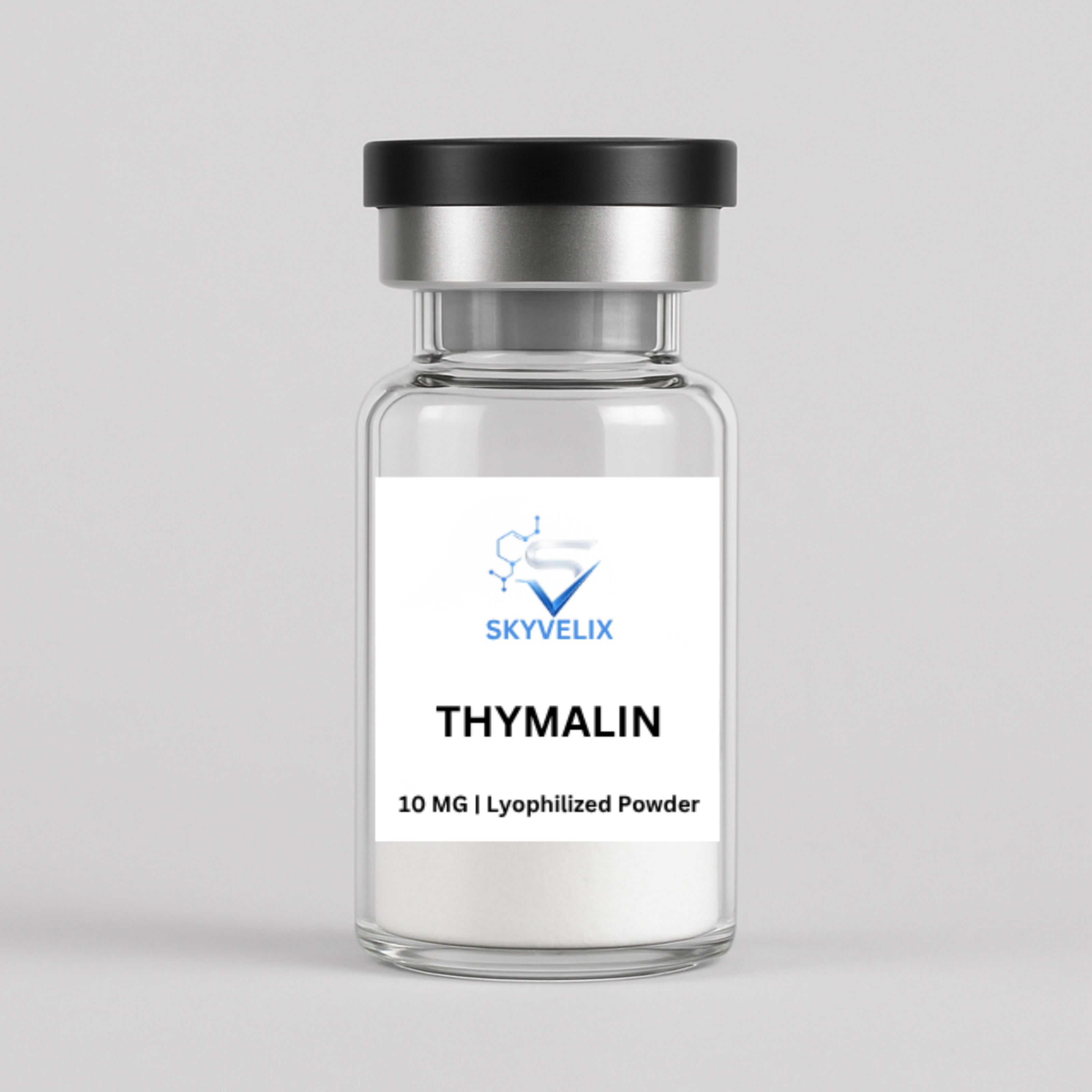
THYMALIN
Thymalin Product Description — Research Use Only
Thymalin is a thymus-derived polypeptide complex studied for its role in immune-system regulation, T-cell activity, hematopoietic cell differentiation, inflammatory-response pathways, and age-related immune-function research. It is commonly researched for how thymic peptides may influence immune balance and cellular communication within controlled laboratory settings.
Research on Thymalin has most commonly focused on T-cell function, immune signaling, hematopoietic stem cell differentiation, cytokine activity, cellular immunity, aging-related immune changes, and immune-response regulation. Published research describes Thymalin as a polypeptide complex isolated from the thymus that regulates immune-system function and may increase functional activity of T lymphocytes.
Thymalin is commonly studied for:
T-cell activity — how T cells mature, activate, and respond
Immune signaling — how immune cells communicate and coordinate activity
Cellular immunity — how immune-cell pathways respond in research settings
Stem cell differentiation — how early blood-forming cells develop into immune cells
Cytokine response — how inflammatory and regulatory immune signals are balanced
Aging-related immune research — how immune function changes with age
Immune balance — how the immune system regulates activity without overactivation
Thymalin is commonly studied because thymus-derived peptides are associated with immune regulation and T-cell-related pathways. In one study, Thymalin increased expression of CD28, a marker associated with mature T lymphocytes, while reducing markers linked with earlier hematopoietic stem cell stages. Other research has compared Thymalin’s immunomodulatory activity with related peptide preparations and reported effects on cytokine production, including TNF-α, IL-1, and IL-10 in peripheral blood cell cultures.
For research use only. Not for human consumption, medical use, diagnostic use, or therapeutic application.